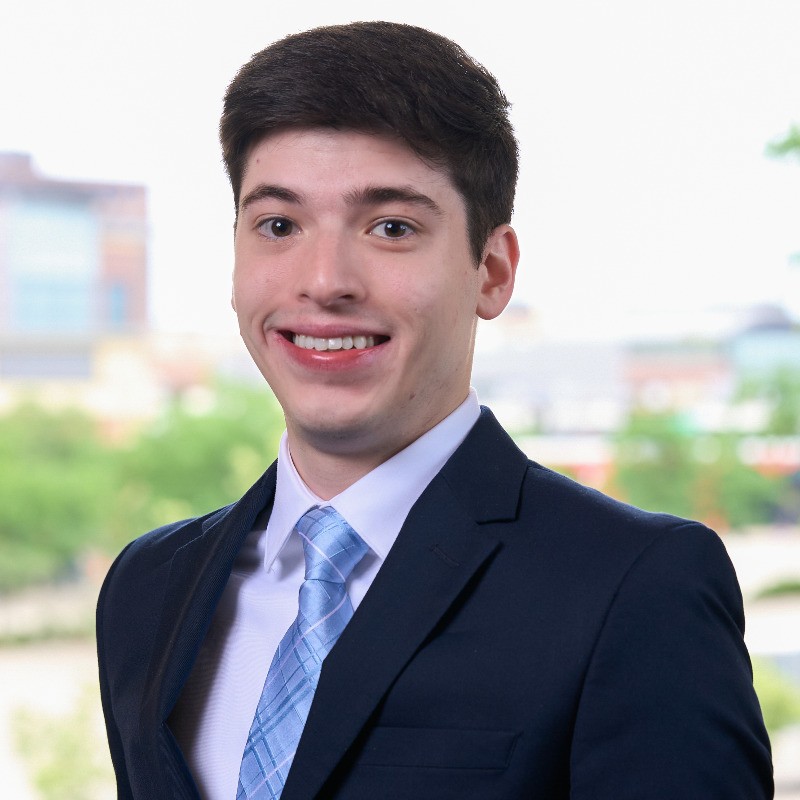
GUI MARINHO
Class of 2024
Investment Analyst, Children’s Healthcare of Atlanta
As you think back about your time in the program, what is an experience, a relationship or a lesson that continues to influence your life or career today?
GUI MARINHO: I think the biggest lesson from the program for me is that problems are actually much harder than they seem and multifaceted. So I think the program really helped me become more open-minded and have strong discussions based on real arguments and data, rather than opinions or perceptions. And I think it’s a big part of leadership too. Not everything is black and white. Leaders have to make decisions that others will disagree with that are very abstract even. And the program has helped me a lot on how to weigh the best possible outcomes, not only for whatever corporation or institution you’re working for, but also to society as a whole.
How has your understanding of leadership evolved since graduating from the program?
GUI MARINHO: I think since graduating, since being part of the program, I realized that there are different ways people can be leaders. Some people are more authoritative and they may give more direction from the top down, with less interaction with the rest of the team. Others want to be very involved and interested in what’s going on in the details with the team members. So I think early in my career, it was more the first example. Now it’s more of the latter, meaning the leadership type that I see is more the teamwork-oriented rather than completion-of-task-oriented.
I think I learned that there’s not one leadership type that will be effective for everyone, for every situation. But I learned that by being myself and caring about the team, caring about the outcome that we are working toward, I can be a good leader with my own set of values without having to change them to adhere to a corporate sort of role or anything like that.
In what ways has the program shaped how you approach challenges, opportunities or decision-making in your professional life?
GUI MARINHO: The Luther Hodges Scholars program has helped me with approaching problems and decisions in my career, I would say, particularly when thinking about stakeholders. I think it’s very easy for professionals to have one thing in mind and it’s profits, but I think the program really helped me assess who everyone involved in this decision or in this outcome is. And I think now working for a nonprofit [in the investment office for the endowment], that is even more important, though I’m working in finance and profit is very important for us. One of the most important things about what we do is generating returns. But we always have to keep in mind who we are generating returns for, how we are doing so, and why. And I think the program really helped us all on thinking about that. It’s not unconstrained. We need to think about how we are generating those things and if they are aligned with our core values as an institution or even personally. So as an example, Children’s Healthcare of Atlanta does not invest in tobacco in any sort of way. That just goes against our policy and our philosophy and mission.
If you could share one message with current and future scholars, what would that be?
GUI MARINHO: Take advantage of everything. You are given so many resources, so much access to incredible people on the faculty side, on the staff side, even academia or industry leaders that you may not have access to when you graduate, for example, if you weren’t part of the program. So I think the program helps you build a community with your peers, scholars and with everyone I just mentioned, staff, faculty and industry leaders. That is pretty special and remarkable. It’s truly a gift that you should not let go to waste. Be active, interact with all of those people, learn as much as you can, go to all the events, read as much research as you can, read the news, talk to people. That’s how you learn.
Finish this statement: “Because of this program, I …”
GUI MARINHO: Because of this program, I have an incredible network of like-minded peers that think about the world in a similar way that I do and are every day striving to have the greatest impacts to society through their business careers.
Interviewed by Phil Hardy. This transcript has been edited for length and clarity.

Luther Hodges Scholars 10th Anniversary
“We’re developing the next generation of business leaders,” said Executive Director Kim Allen.
The program’s 10th anniversary celebration offers a chance to trace its evolution, from its earliest days as the Kenan Institute Leadership Fellows to the transformative program it is today.