

I’ve always been intrigued by the idea of the “American Dream.” It’s a powerful thing when an idea inspires generations of people to build a better life, regardless of their background.
As the daughter of parents who immigrated to the United States, this concept has always been one that I’ve been interested in diving in deeper, especially as the world continues to change.
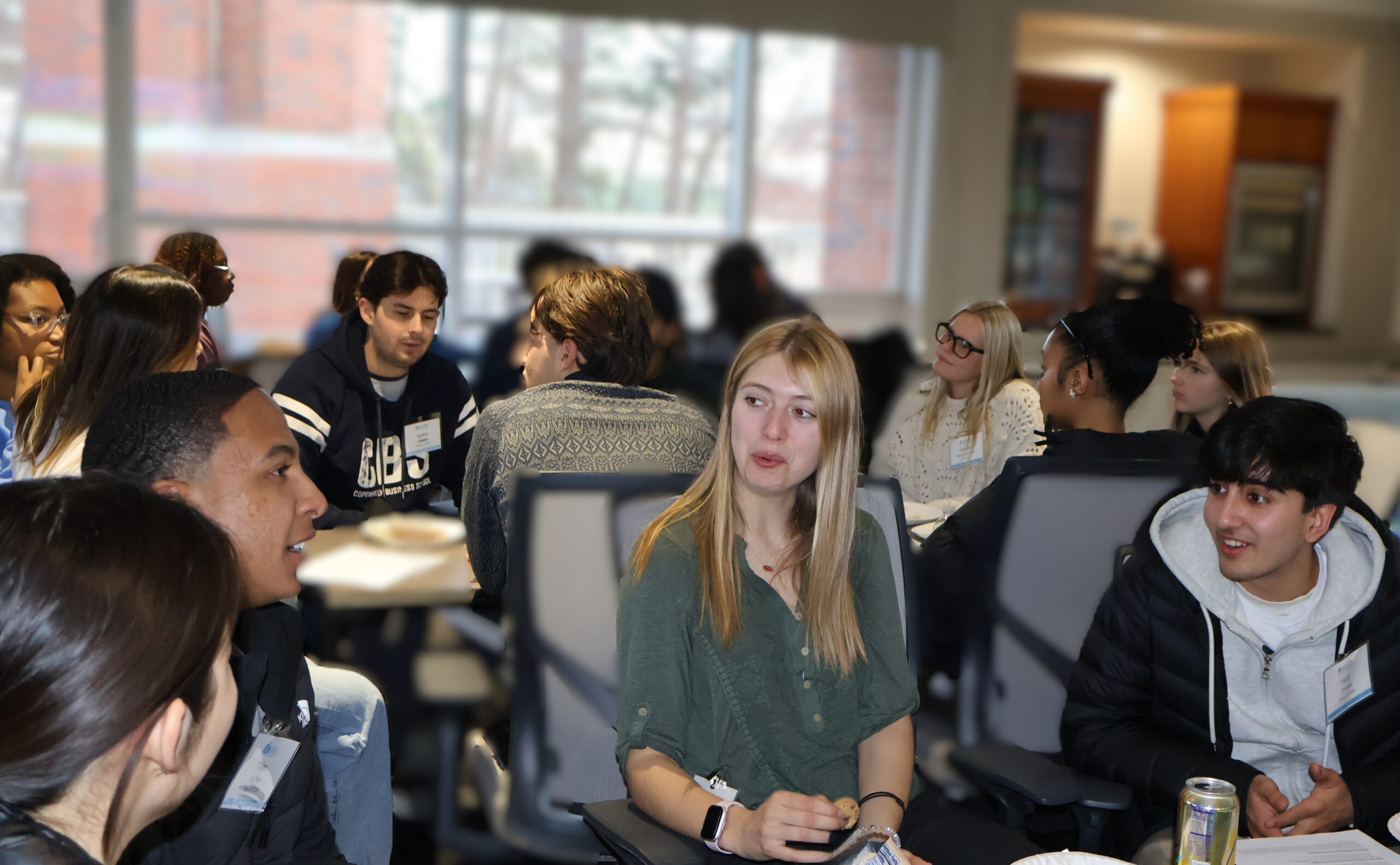
This is what drove me to attend the Luther Hodges Living Room Conversation on the American Dream. One of the best parts of being a scholar is the diverse community cultivated, with everyone having a different background and way of thinking. I was eager to hear what my fellow scholars had to say regarding this subject.
We started by discussing what “success” looks like after graduation to each of us, and how external forces influence our decisions. This question was particularly interesting, as we had members in our group of all ages and in different stages of their career journey, ranging from having full-time offers to just starting to enter the market. Our group discussed a lot about the external pressures of social media, where it seems as though there is an overwhelming inside look into everyone’s life. The idea of “success” looks different to everyone, and it’s important to respect others’ trajectories while making sure individuals focus on what makes them happy.
Another key idea that was discussed was the idea of how the “American Dream” is changing, especially from our parents’ generation. When the previous generation was looking for jobs, it was much more common to get a job at a company and stay there for multiple years, emphasizing loyalty to a specific company.
However, my group believed that the landscape of work is changing with flexibility being emphasized and young people being much more willing to pivot careers and even industries in a way not seen before. This topic reminded me of the 2026 Kenan Institute Grand Challenge: Renegotiating Work. These days, employers must prioritize flexibility in industries they’ve never had to before. Our group’s opinion was that it was a good thing that “being flexible” and “building skills” were prioritized, compared to long-term security.
It’s interesting trying to be able to balance workplace demands in an era where virtually everything seems to be changing.
To conclude our conversation, we talked about how we would redefine success for our early careers.
I really love Living Room Conversations. It’s not every day where you get to have an intentional conversation with your peers, where there is emphasis on listening to truly understand. In an overwhelming college world, having honest communication really helps to ground you.
The idea of the “American Dream” continues to be a powerful force, and it’s important to understand its nuances and how the idea continues to change.